Tuesday, May 17, 2016

Compassion @ Work: Respond with Compassion


Listening with intent is natural when our focus is in the present moment.  This listening might be with our ears to hear words, with our eyes when reading, smelling with our nose, tasting with our mouth, or feeling with any part of our body.  With our senses, we are hyperaware to what is occurring.  We recognize our potential to react or to respond. 

All our gathered information provides the foundation for compassionate response.  If we follow our usual pattern of conversation, half processed words may burst out of our mouth cutting off another’s words.   Our reactionary comments are not conducive to entering into a dialogue of understanding.  We become mired in misunderstanding; the journey to common ground becomes impossible. 

A compassionate conversation has three definable parts.  It begins with bi-listening — we gather external information while being aware of our judgments, assumptions, and beliefs.  The next step, the pause is arguably most important to the conversation.  In this time of physical silence, we create our response.  The pause begins when the other person stops speaking, and continues as we gather our thoughts and form potential responses and reactions.   

During this physical silence and pause in the conversation, we formulate our words.  We are ever mindful of the potential impact of what we say.  We weave compassion into both our words and the energy behind them.  In the pause we decide if our response is compassionate or reactionary.

This pause may be a brief as 15-20 seconds.  (This time may not seem so brief when we are in it!)  In moments of quiet, we reach into the core of our being and tap into compassion.  This moment, no matter how short, provides the time to recognize angst and to choose not to react from it.  We de-escalate potentially hurtful reactions.

Being compassionate doesn’t mean that we forego honesty.  When we respond in ways that are compassionate, are our words loving, gentle, and true. The timbre and cadence of our voice and our body language clearly models our compassionate stance.  We disagree in gentle, non-hurtful ways and ask questions that bring greater understanding.  We speak in “I” language and accept responsibility for our beliefs and judgments while respecting the beliefs and views of another.

Practice:  Before an upcoming conversation, spend a few moments alone.  Focus on your breathing. Be aware of how your mind is pulled by distractions.  Name the distractions. Visualize your breath entering your body.  With each inhale your body further relaxes.  If you have an expectation for the conversation, name it.  Open yourself to listening without expectation or agenda.

Enter the conversation.  Listen to the external conversation. Pay attention to what judgments, assumptions, and beliefs surface internally. 

Take time after the person finishes speaking to gather your thoughts.  Before speaking, use the compassion litmus test.  Are your words loving, gentle, and kind? Are there any barbs of hurt?  If you notice hurt in your response, rescript.   (Compassion requires honesty.  Honesty doesn’t have to hurt!)

As you respond, pay particular attention to how your partner responds and reacts through body language and spoken words.  Script your response based upon what you notice.

Continue the dialogue using this model of listen with intent, respond with compassion.

Listening with intent and responding with compassion isn’t difficult, but like most life skills, it takes practice.

Practicing compassion,

Vanessa


Vanessa F. Hurst is a Community Builder who consults with organizations to strengthen stakeholder relationships and improve organizational culture.   Her program “Listen with Intent, Respond with Compassion” creates a rich, dynamic space where trust increases and understanding occurs.  Through this experiential training, participants discover what prevents them from listening objectively and with an open mind.


502.599.7222  § www.intentandaction.com § blog: vanessahurst.blogspot.com §

Wednesday, May 11, 2016

Through Light Pollution Into Points of Light

Piercing the darkness are a million points of light.   At times in our life we cannot see the sparkling lights.  Our world is filled with light pollution.  All we see is murkiness in our night sky.  We may feel a density and smell a heaviness that is seemingly impossible to break through.

So stuck we do not realize that we have the power to move through the light pollution and peer into the darkness.  Unlike when we live in the city, we cannot just drive 20 miles or so and find our self in the deep darkness of the wild.  Instead we find the sparkling lights in the silence in our quiet mind.  Using our breath, we expand our silence and push out the pollution — the illusions that prevent us from seeing the twinkling stars of possibility.

Try this:  find a quiet space.  Focus on your breath.  Visualize the air entering your crown through each breath.  Imagine being surrounded by a membrane.  Each time your inhale the membrane slowly inflates into a bubble.  As it fills with air, the membrane becomes firmer and firmer. 

Bubble filled.  Imagine subsequent inhales gathering up the energetic gunk.  Maybe these are emotions, thoughts, or a feeling of malaise.  Intend that each exhale is pushing the gunk from your body, mind, spirit, and heart.  It enters your energetic bubble.  Visualize the thinning of the membrane.  Inhale deeply.   With your next exhale…whoosh!  Feel the light pollution rushing out of the bubble and through the membrane. 

Now return to your breath.  Fill your self with peace and compassion.  Notice how you feel. 

With your attention on your self, you may receive information about the roots of your light pollution.  You intuitive awareness is activated.  With a clearer mind, you are able to take steps to change what is polluting your energy field.  Now notice….see the million points of light radiating into you.   

Vanessa

Vanessa is an Intuitive, Community Builder, and Compassionista, and Author of Engaging Compassion Through Intent & Action


More from Vanessa & Living with Intent and Action: www.intentandaction.com

Tuesday, May 10, 2016

Listen With Intent: Compassion At Work


Intentional listening is a way of engaging another in conversation by paying attention to what the other is saying.  Instead of interrupting, we wait to formulate our response until after s/he finishes speaking.  No longer do we interject and, in doing so, cut off another person’s words.  Instead, we listen to what is said while noticing how the comments of another may trigger our judgments and assumptions.  Attention focused inward and outward may create pocket of silence between each sharing.

This way of conversing requires a lot of energy and total focus on the present moment.  Intentional listening asks that we become comfortable with any pauses that are a result of our, or the other person’s, response formulation.  During these moments of silence, we decide the most gentle, honest compassionate response.  With practice these moments of silence become a comfortable, integral part of any dialogue.

We cannot create a grocery list or think about how we will reach a deadline when listening in this way.  When our attention slips, we lose connection.  Unable to listen to what the other person is saying, we miss important information.  Externally this information is provided by words, body language, or the inflection of a word or phrase. 

Internally, a judgment may unwittingly surface through our internal monologue.  It fuels a reaction to what the other said.  Our reactionary strike shuts down the conversation.  At best, we have lost an opportunity to reach understanding.  At worst, we may have created an unsafe environment where free speaking is discouraged.  Rebuilding trust may prove difficult.

Staying in the moment while simultaneously listening to our internal monologue and external dialogue takes practice.  Listening with intent involves bi-listening to internal and external conversations.  Communicating through bi-listening comes with rewards.  In being fully present to another while acknowledging our judgments and assumptions, we craft gentle, honest, compassionate responses.  Each response fortifies the foundation of great relationship and stronger organizational culture. 

Practice:  Before an upcoming conversation, spend a few moments alone.  Focus on your breathing.  Be aware of how your mind is pulled out of the moment by distractions.  Acknowledge the distractions.  Visualize your breath entering your body.  With each inhale your body further relaxes.  If you have an expectation for the conversation, name it.  Open yourself to listening without expectation or agenda.

Enter the conversation.  Listen to your internal monologue.  Pay attention to the external conversation.  Take time after the person finishes speaking to gather your thoughts and respond. 

After the conversation:  Was your communication different? If so, how?


Vanessa F. Hurst is a Community Builder who consults with organizations to strengthen stakeholder relationships and improve organizational culture.   Her program “Listen with Intent, Respond with Compassion” creates a rich, dynamic space where trust increases and understanding occurs.  Through this experiential training, participants discover what prevents them from listening objectively and with an open mind.

Wednesday, May 4, 2016

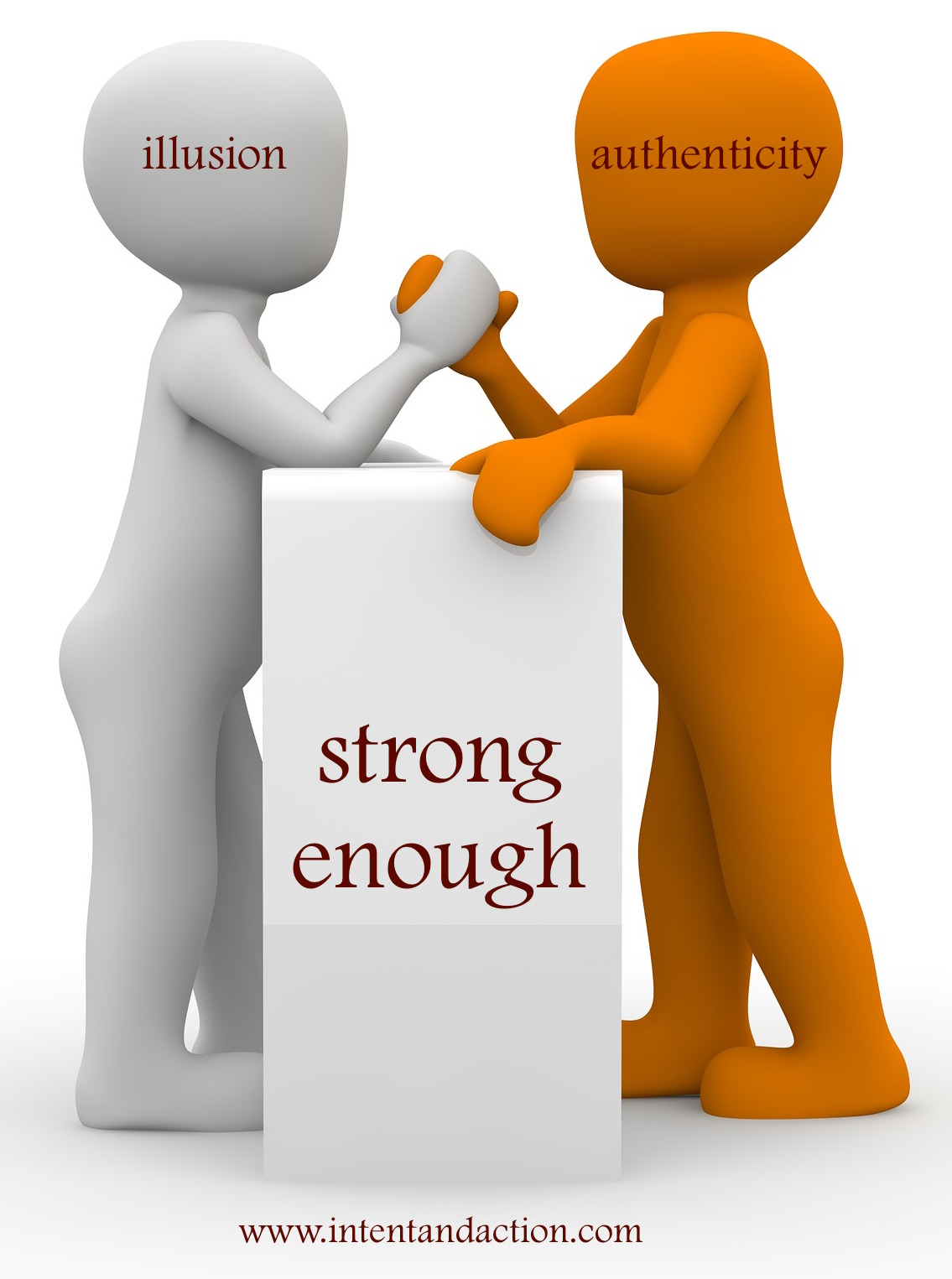
Strong Enough

This is my year of curious daring and courage.  It has been my mantra over the past several months.  The outcome has been a stronger, more assured way of responding to the world. With a “just do it” attitude, failures and non-inclusions are no longer negatives; rather, they are nudges to get me back on the path of life purpose.   Navigating with courage, I am stronger and more confident to use the constructive parts of criticism to grow.

Earlier this week, I sent my resume to a recruiter.  The return email began, “I don’t know how you write resumes in Louisville, but….”  My first response was to scoff defensively as I reminded myself of the number of resumes I have written for others that have resulted in job offers.  His words were a blow to my ego.  I judged his comments as snarky.  Then, I used the RI2 process (reflection, introspection, integration) to refocus, reframe, and respond.

First I acknowledged the hurt and feelings of inadequacy — reflection.  Next, introspection found me asking the question, “How strong are you?”  Well, I decided that I was strong enough to accept the critique and make changes to my resume — re-patterning my response.  Finally, I integrated this belief in my self by confidently re-scripting my abilities and fashioning a better marketing piece.

Becoming strong enough is the power behind curious daring and courage.  Using RI2, I moved past the hurt that threatened to shut me down.  I reflected and introspected to look what lay at the base of the trigger.  And, through reflection and introspection, his comments became a catalyst for discovering a new way to showcase my skills and talents. 

I am strong enough to receive ego bruising news and make the changes that better reflect who I am — to be my most authentic self. 

Wishing you the strength to be your best, most authentic self,

Vanessa

Vanessa F. Hurst, MS,  is an Intuitive, Community Builder, and Compassionista, and Author of Engaging Compassion Through Intent & Action.  Contact her